
Introduction
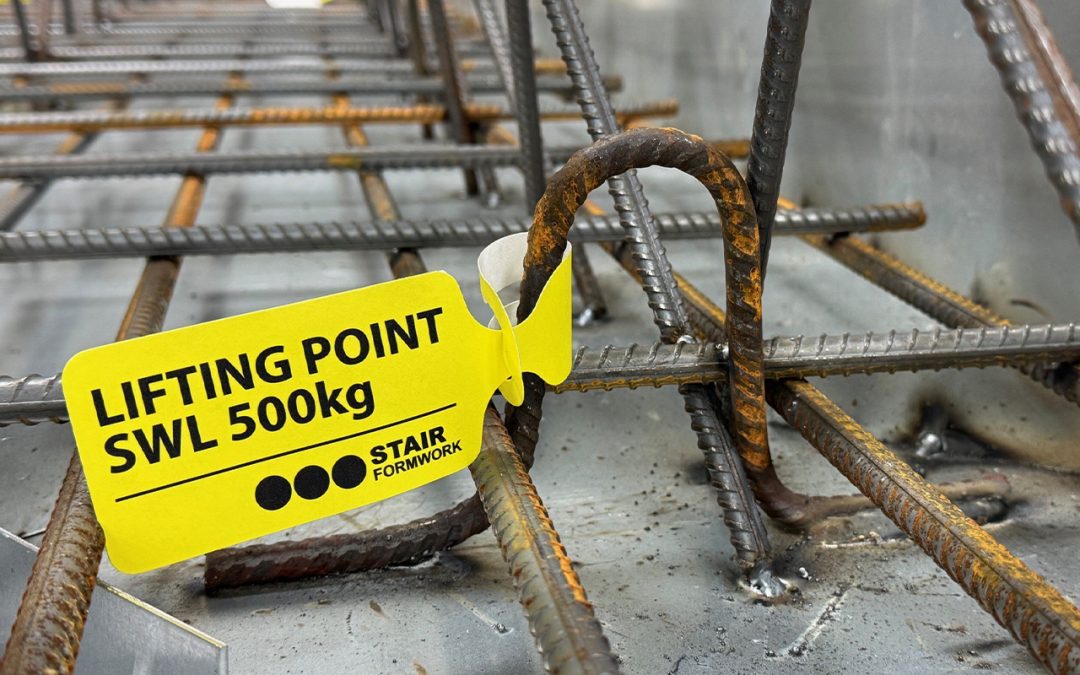
Every stair flight we manufacture is fitted with four lifting hooks. These humble components are critical to safety—they are the only thing between the crane and a multi-tonne concrete pour.
But how do we know they are strong enough? The answer lies in rigorous load testing.
The Testing Methodology
We conduct tensile load testing on every batch of welding to ensure consistency and safety. The process is straightforward but demanding:
- The hook plate is fixed to a substrate.
- A bar is placed vertically above the hook.
- A hollow jack applies a vertical tensile pull force.
- Load is increased until deformation or failure occurs.
The Results
We tested an average of six welders over two products each. The results speak for themselves:
- Test 01: Average failure load of 2,197kg
- Test 02: Average failure load of 2,276kg
These figures far exceed the loads these hooks will experience during normal handling and installation. The safety margin built into our products ensures that even under abnormal conditions, failure is highly unlikely.
Design and Standards
Our lifting hooks are 10mm mild steel Grade 250R, secured using 6x60mm fillet welds, conforming to BS 8666:2005. Each flight typically features four hooks, providing redundancy and balance during lifting.
Why This Matters On Site
When your site team cranks a stair flight into position, they need absolute confidence in the lifting equipment. Our testing provides that confidence. Every hook is certified, every weld is inspected, and every flight is safe to handle.
Conclusion
Safety is not accidental—it is engineered. At Stair Formwork Ltd, we test to failure so that our products never fail on site.
Have a technical question about our products? Speak to our design team.